
Discovering the Town of the Gattopardo
Myths and Legends
The Siren Between Myth and Memory
It is said that Giuseppe Tomasi di Lampedusa, the celebrated author of “Il Gattopardo” (The Leopard), was particularly fond of Lighea among all his writings. It is a compelling love story in which a young Greek student, preparing for an examination, has the most extraordinary of impossible encounters in the Sicilian sea: that with a Siren: “I am Lighea, I am the daughter of Calliope. Do not believe the fables invented about us: we kill no one, we only love” […] “Below the groin, below the buttocks, her body was that of a fish, covered in tiny pearly blue scales, ending in a forked tail that slowly beat against the bottom of the boat.”
Lighea is the tale of an absolute and supernatural love, written in the final months of the author’s life, Giuseppe Tomasi di Lampedusa’s “spiritual testament”: the chronicle of a “terrible fortune” that leaves its protagonist, Rosario La Ciura – future senator and world-renowned classical scholar – a stranger to the world of men after experiencing the love of a Siren.
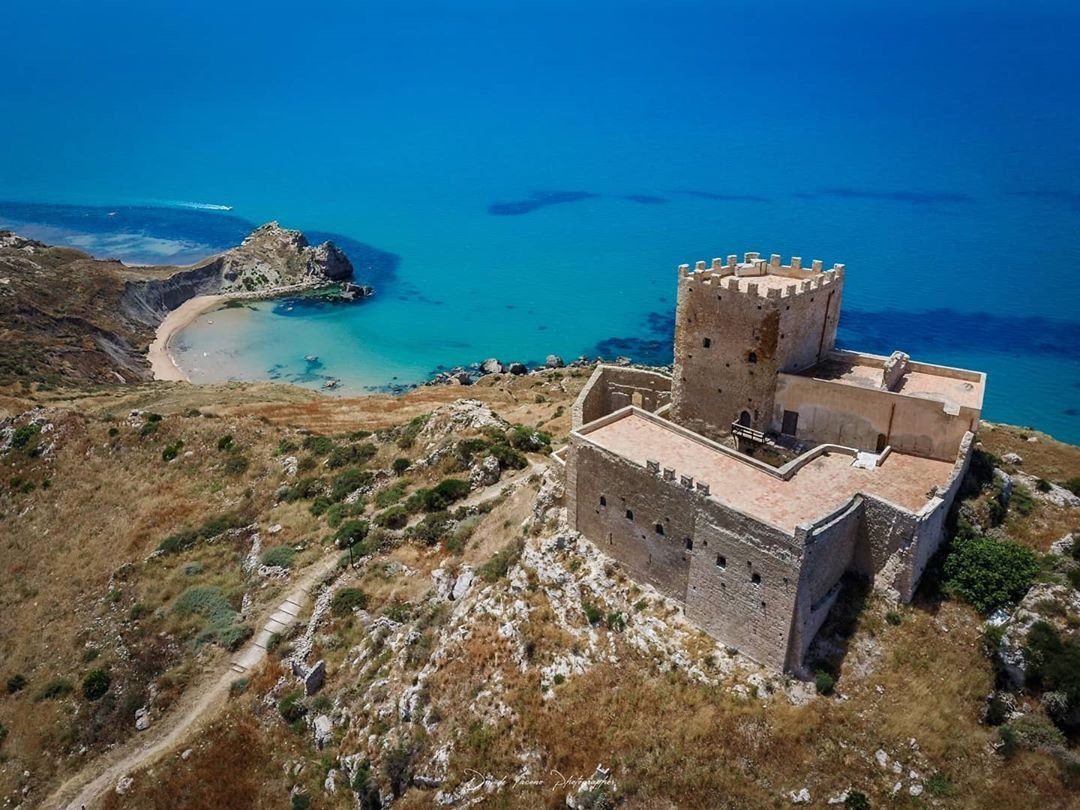
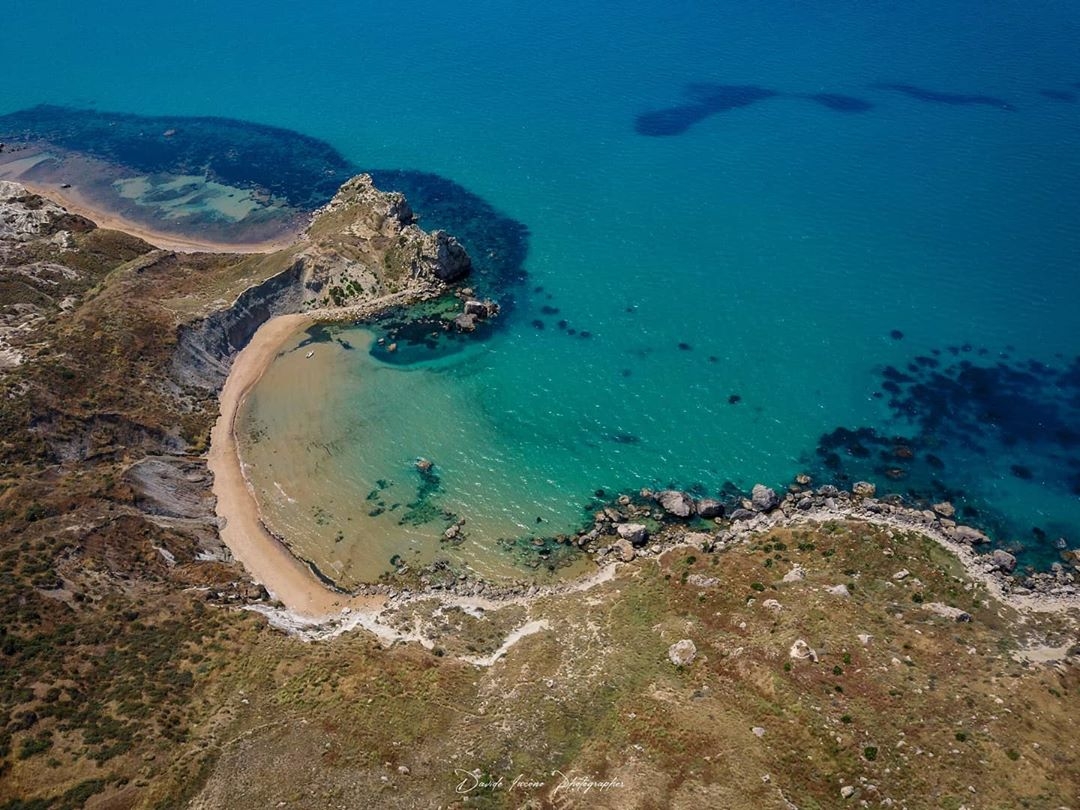
There is a moment, on Sicilian summer afternoons, when the boundary between sea and land vanishes beneath the weight of an unrelenting sun. It is in this blurred landscape that the literary places and the author’s ancestral heritage seem to converge: the crystal-clear coves of Augusta, which he knew in his youth, seem to merge with the enchanting discovery, later in life, of the beguiling Bay of the Sirens below the Castle of Palma di Montechiaro, once belonging to his ancestors. It is here, among the waves of the soul and the ebb of memory, that Lighea appears: she rises from the waters and clings to young Rosario’s boat as he studies Greek, bringing with her the intoxicating taste of the sea and of love. A sensory and metaphysical union in which the Siren, daughter of Calliope, reveals to the young man a different reality, where time does not exist.
The end of summer marks their physical separation, but not that of their souls. Lighea returns to the depths, yet leaves Rosario with an indelible mark that will shape the course of his entire life.
In Giuseppe Tomasi di Lampedusa’s biography there is a singular “divide” that nevertheless sheds light on his creative world: the place of his dearest memories did not coincide with that of his family origins. Throughout his childhood and youth, the earthly paradise of his summers was the splendid family palace on his mother’s side in Santa Margherita di Belice. Palma di Montechiaro, the historic cradle, the ancestral fief of his ducal forebears, long remained for him merely a name on old deeds and family memories.
The discovery of his ancestral homeland, which took on the contours of a true spiritual revelation, came only between September and October 1955. Now fifty-eight, and in the midst of writing The Leopard, the author made two historic trips to Palma di Montechiaro. He no longer owned anything there, yet the warm welcome of the local people and his encounter with the cloistered nuns of the Monastery of the Holy Rosary deeply moved him. That late journey stirred a tumult of family memories that gave decisive impetus to his writing. In his celebrated correspondence, the writer himself would clarify the synthesis of that rediscovery: “Donnafugata as a town is Palma; as a palace it is Santa Margherita.” The real Palma, with its Cathedral columns and the mysticism of Blessed Corbera, provided the novel with its monumental setting and ancestral soul.
Something similar seems to emerge in the genesis of Lighea, “The Siren”, his most poetic tale, written two years after his discovery of Palma di Montechiaro. Although the story is set on the Ionian coast of Augusta, which the author knew in his youth, the Bay of the Sirens, at the foot of the Chiaramonte Castle in Palma, seems to embody the emotional archetype of that wild coastline, with its crystal-clear coves scorched by a “solar brutality”. Moreover, a local legend tells of sirens appearing to the sailors and soldiers of the castle of the writer’s ancestors, enchanting them on the very cliff that shelters the cove. The Bay of the Sirens thus becomes the emotional and symbolic matrix of a return home: a metaphysical ecstasy like Lighea’s kiss, capable of rendering every other earthly fascination a mere shadow.