The English officer who lived to Italy’s most beautiful archaeological area: the Temples Valley
Art and Culture
THE TREASURE OF THE CATHEDRAL

Sala dei Sarcofagi - Cattedrale
PCE - Arcidiocesi di Agrigento

Sarcofago di Fedra - Cattedrale
PCE - Arcidiocesi di Agrigento
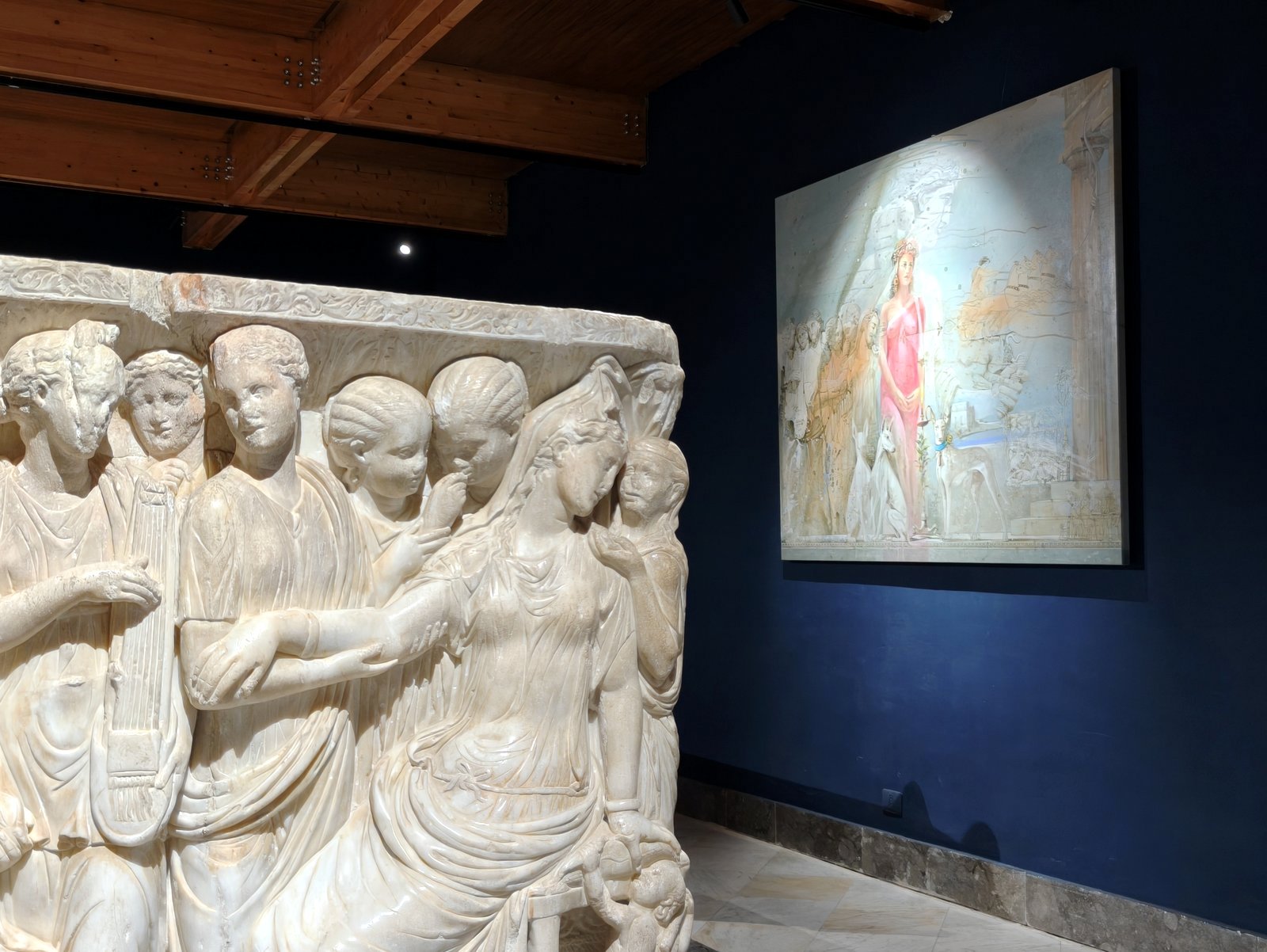
La Confessione di Fedra (2025) - Benedetto Poma
PCE - Arcidiocesi di Agrigento
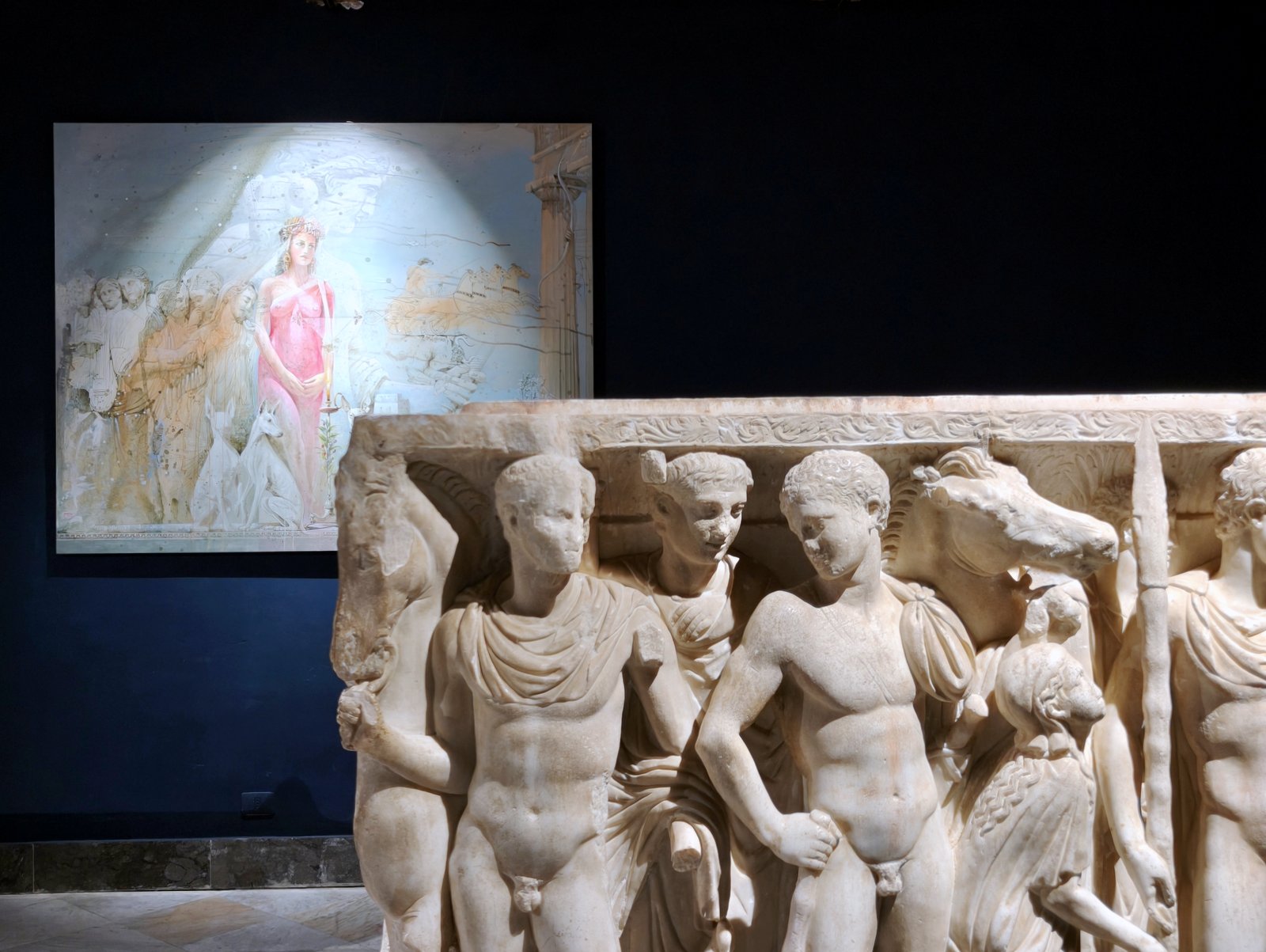
La Confessione di Fedra (2025) - Benedetto Poma
PCE - Arcidiocesi di Agrigento
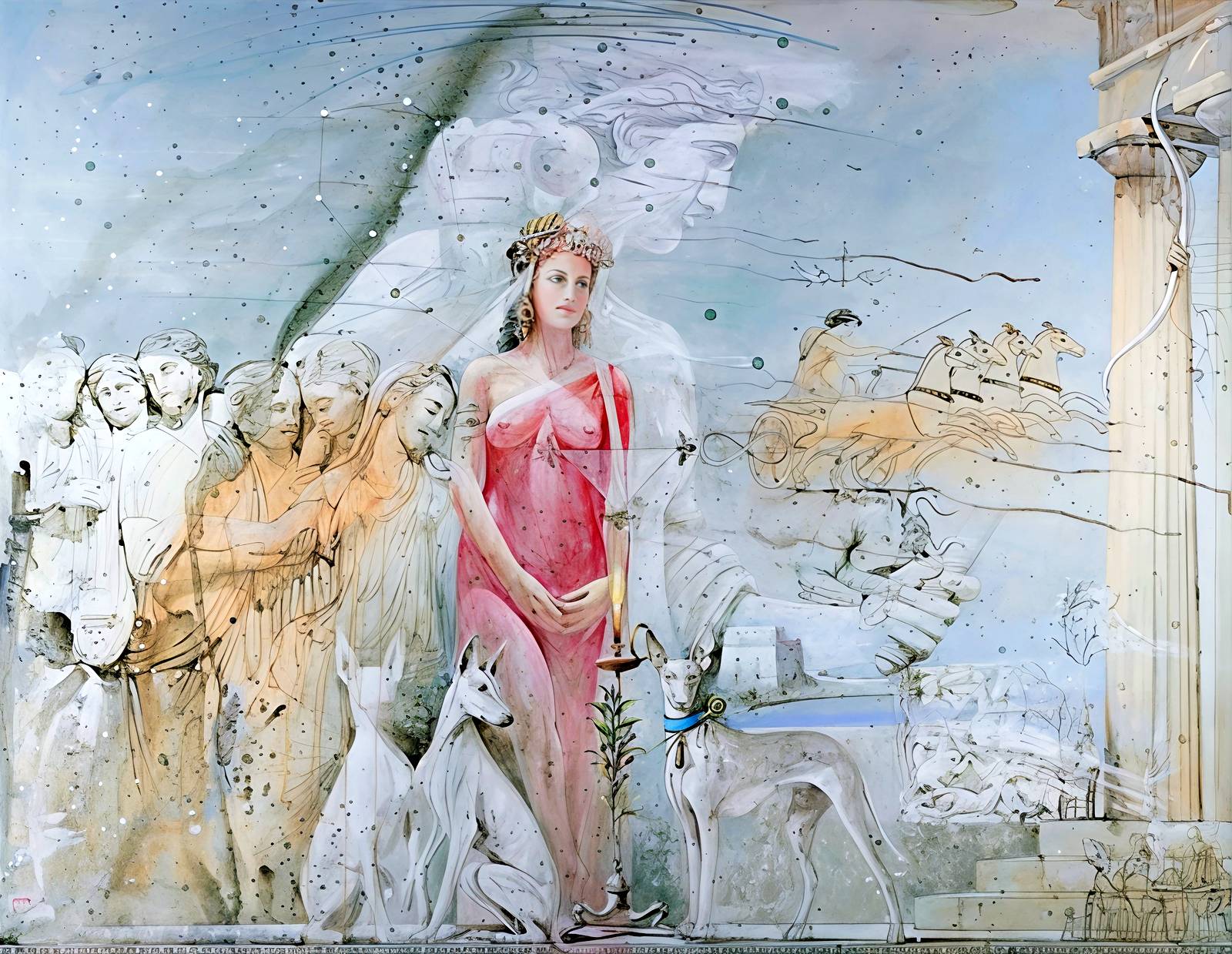
La Confessione di Fedra (2025) - Benedetto Poma
PCE - Arcidiocesi di Agrigento
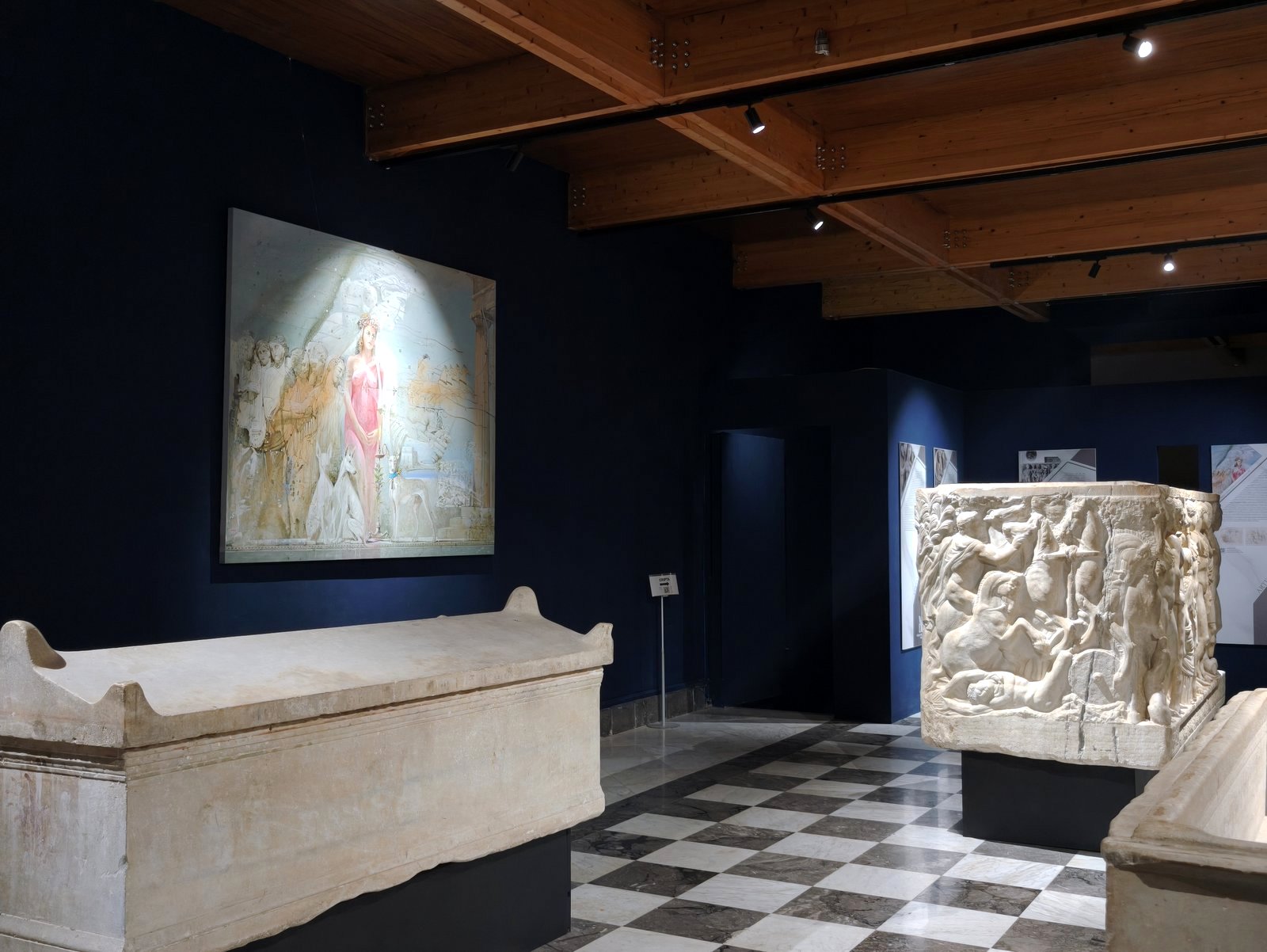
Sala dei Sarcofagi - Cattedrale
PCE - Arcidiocesi di Agrigento

Sarcofago Greco- Cattedrale
PCE - Arcidiocesi di Agrigento

Sarcofago delle Donne Coronarie - Cattedrale
PCE - Arcidiocesi di Agrigento

Sarcofago delle Donne Coronarie - Cattedrale
PCE - Arcidiocesi di Agrigento

Sarcofago Greco- Cattedrale
PCE - Arcidiocesi di Agrigento
After decades of forced closure and to the great joy of historians and the cultural community at large, the Cathedral has reopened the doors of its legendary “Hall of the Sarcophagi” to the public once more. This story with a happy ending starts in the 18th century, when it was a fashionable custom for young European aristocrats to complete their cultural education with a trip to southern Italy – the ‘Grand Tour’ – to visit the monuments of the classical age. Due to its many archaeological sites and riches, Sicily was an indispensable destination and soon became a popular stop, as described by J.Von Riedesel and J.W.Goethe in their travel journals. Furhermore, Winckelmann stimulated a renewed interest in Greek architecture and art by his descriptions of the grandeur of the temples in his “Anmerkungen über die Baukunst der alten Tempel zu Girgenti in Sicilien”. In this climate of cultural renewal and of great interest for antiquity, the Cathedral of Agrigento was embellished with a small collection of rare classical art: four marble sarcophagi, two of which from the Greek age and two from the Roman age.
One of the first travellers to arrive in the City of Temples was Baron J. Von Riedesel: in 1767 he described his admiration for the sarcophagi in his journal: “in the place that currently serves as a baptismal font there is one of the most excellent, perhaps even the most beautiful of all the ancient marble bas-reliefs, that the fury of time has spared“. Soon after, in 1787, Goethe noted the following words in his diary whilst in enraptured contemplation of the “Phaedra’s Sarcophagus” in the Cathedral of Agrigento: “I believe I have never seen a more superb bas-relief. The work of art is perfectly preserved; I consider it a perfect example of the most graceful artistic period.” The masterpiece, unscathed by the centuries, dates back to the imperial era and illustrates the myth of Hyppolitus and Phaedra in bas-reliefs of poignant beauty. The dynamic arrangement and expressiveness of the figures and the harmony of their forms evoke the tragic story of the two young overwhelmed by the consequences of a forbidden, unrequited love.
The Sarcophagus of Hippolytus and Phaedra recounts the myth in its most moralising and aristocratic form, the one favoured by Roman imperial culture on funerary monuments, following the Classical Greek tragic tradition. The bas-reliefs depict Phaedra entrusting her nurse with the letter containing her declaration of love for her stepson Hippolytus: an indirect gesture that keeps her in the shadows of modesty and embarrassment. At the centre of the composition stands Hippolytus, a young hunter and horseman, the embodiment of virtue and moral integrity. The iconographic programme thus presents a reading of the myth in which Phaedra’s passion appears as a disturbing force, while Hippolytus embodies the ideal to be celebrated. This iconographic programme recalls Euripides’ Hippolytus Crowned (Hippolytus Stephanophoros, 428 BC), in which the tragedy of the Cretan queen unfolds under the weight of guilt and fate.
Following the path traced by Seneca’s Hippolytus, which had already restored greater prominence to its female protagonist, Benedetto Poma’s painting The Confession of Phaedra (2025), recently acquired by MUDIA and displayed in the same gallery, establishes an artistic and symbolic dialogue with the sarcophagus, overturning its perspective.
Drawing upon the different iconographic strata through which the myth has evolved, Benedetto Poma places Phaedra at the centre of the scene, standing in her royal dignity and wrapped in a red peplos, a colour that evokes both love and martyrdom. No longer the author of an improper letter entrusted to another, she becomes the fully conscious protagonist of her own confession and destiny.
At her feet, the Cirnechi dogs, descendants of the ancient greyhounds depicted beside Hippolytus on the sarcophagus, now watch over her as silent guardians: the hunter’s dogs thus become the protectors of the heroine, in a subtle iconographic reversal of roles. Beside her, the grieving figures evoke the nurse and the mourning for Hippolytus, who was fatally overwhelmed by his chariot. In the background, Aphrodite, holding the apple of destiny in her hands, evokes the divine will that set the tragedy in motion, while among the ancient remains of Akragas the bow of Diana, Hippolytus’ protective goddess, emerges. The dialogue between the two works, separated by almost two thousand years yet reunited in the same room, reveals two different readings of the myth: on one side, the ancient vision, which privileges the figure of Hippolytus and relegates Phaedra to the margins of the scene; on the other, the contemporary reinterpretation, which restores to her a voice, a body and tragic grandeur. Two eras, two perspectives on the feminine, one story that continues to question us.
During the era of the Grand Tour, the accounts of travellers soon established the Cathedral as an essential destination: after admiring the Doric temples in the Valley of the Temples, visitors would continue their journey to the Cathedral to encounter the “Sarcophagus of Phaedra”. Besides the more renowned ‘Sarcophagus of Phaedra’, the Hall also contained three other sarcophagi. The first was a small tub-shaped tomb from the 3rd century AD with a carved portrait of the deceased, an unknown Roman notable, surrounded by scenes of rural life and two women intent on weaving crowns. The other two were simpler Greek sarcophagi (4th century BC), partly decorated with painted motifs still visible in several places. The great appeal of the ‘Sarcophagus of Phaedra’ and the other precious exhibits soon contributed to the establishment of an articulate collection of antiquities linked to the Cathedral.
Over the centuries the treasury was further enriched with precious liturgical works of art from different eras and the Diocesan Museum, now called MUDIA: Museum of the Treasures of the Cathedral, was established. Since the sixties, a landslide has been menacing the hill on top of which the Cathedral is perched and so, in 1966, the cultural assets of the Diocese were transferred elsewhere for safekeeping. The collection was divided and for forty years the sarcophagi were separated: three were exhibited in the Regional Archaeological Museum ‘Pietro Griffo’ and one in the adjacent Church of San Nicola. Today, thanks to extensive works and the Arkeo & Fede museum enhancement project, these four archaeological jewels are once more brought together in the Cathedral and can be admired in an intimate and well-kept area off the northern aisle. The Cathedral is once again an essential stop on a visit to Agrigento, as is the adjacent Diocesan Museum (MUDIA) where other precious objects of art and faith are exhibited. Take your time to admire the fabulous collection of works of art that make up the Treasure of the Cathedral.